Owl and the Moon: A Designer’s Review for Real Projects
As an embroidery designer who spends more time staring at stitch maps than I do sleeping, I have learned that not every machine embroidery design is created equal. Some look fantastic on a screen but turn into a tangled mess of thread breaks and puckering on fabric. Others are workhorses—reliable, charming, and versatile enough to carry a small business through a busy holiday season. Today, I am pulling Owl and the Moon off the digital shelf to see if it holds up under the needle.
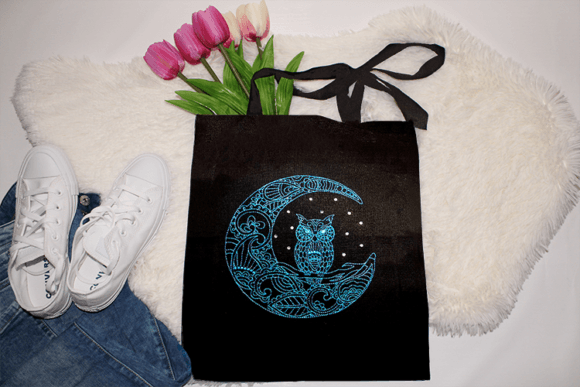
This particular piece falls squarely into the Birds category, but it is less about ornithological accuracy and more about whimsical charm. The description notes that this adorable line art Embroidery design was originally stitched with KingStar Metallic thread, with hotfix rhinestones added for sparkle. That specific detail tells me something important before I even load the file: this design relies on contrast and texture. It is not just a flat image; it is meant to catch the light.
First Impressions: Mood and Visual Personality
When I first opened the preview for Owl and the Moon, the immediate feeling was one of calm nostalgia. The composition is simple—an owl perched, likely watching over a crescent moon. This simplicity is its greatest strength. In the world of design assets, complexity often kills clarity. A cluttered design gets lost on a textured towel or a stretched sweatshirt. This line art approach suggests clean outlines and open spaces, which means it will breathe well on fabric.
The mood is gentle. It feels appropriate for nursery decor, cozy winter apparel, or thoughtful gifts. It does not scream for attention; instead, it invites a closer look. For an Etsy seller or a boutique owner, this is valuable. You want products that feel curated and intentional, not loud and chaotic. The visual personality here is soft, making it a strong candidate for baby items or personalized gifts where subtlety is key.
Real-World Application: Where This Design Shines
I recently worked on a custom order for a local bookstore that wanted branded tote bags for their children’s section. They needed something that looked professional but playful. Owl and the Moon would have been perfect for that tote bag design. The line art style translates beautifully to canvas or cotton twill. Because it is not overly dense, it does not weigh down the fabric, preventing that stiff, cardboard-like feel that cheap embroidery often leaves behind.
Beyond totes, consider sweatshirt embroidery. A crewneck sweatshirt in heather gray or deep navy provides the perfect backdrop for this motif. If you follow the original inspiration and use a metallic thread for the moon or the owl’s eyes, you add a layer of luxury without increasing the stitch count significantly. This elevates a basic garment into a handmade product that commands a higher price point. Customers appreciate that extra touch of shine—it signals quality.
For those running a craft business, versatility is currency. This design works equally well as a small chest logo on a cap or a larger centerpiece on a pillow cover. It fits the aesthetic of holiday embroidery projects, particularly for autumn and winter collections. Imagine it on a linen tea towel as part of a housewarming gift set. The natural fibers of linen complement the organic subject matter, creating a cohesive finished product that feels earthy and refined.
Technical Considerations and Fabric Choices
While Owl and the Moon is appealing, we must discuss the technical realities of stitching it. The mention of KingStar Metallic thread in the description is a clue, but also a warning. Metallic threads are notorious for breaking if the tension is too tight or the speed is too high. If you plan to replicate that sparkling effect, you need to slow down your machine and use a top-stitch needle designed for metallics. Do not rush this step.
Fabric texture matters immensely here. On a smooth cotton or polyester blend, the line art will appear crisp and defined. However, on a highly textured fabric like a thick wool blanket or a terry cloth towel, fine lines can get lost. If you are stitching on terry, you might need to increase the stitch density slightly or use a heavier weight thread to ensure visibility. Always test on scrap fabric first. Never assume a digital embroidery file will behave the same way on every material.
Stabilizer choice is non-negotiable. For stretchy fabrics like jersey t-shirts or baby onesies, a cut-away stabilizer is essential to prevent distortion. The owl’s shape, with its rounded body and pointed ears, can warp if the fabric pulls during wear. For woven fabrics like aprons or tote bags, a tear-away stabilizer usually suffices, provided the stitch density is moderate. Since this is line art, it likely uses more running stitches and fewer fill stitches, which is easier on the fabric but requires precise hooping to keep the lines straight.
Navigating Challenges: Small Hoops and Dark Fabrics
One area where you need to be careful is scale. If you are shrinking this design to fit a small hoop size, such as a 4x4 inch hoop for a pocket patch, check the detail level. Tiny details in the owl’s feathers or the moon’s craters might merge together if scaled down too far. Zoom in on your software. If the lines become thinner than 0.5mm, they may not stitch out cleanly. In such cases, it is better to simplify the design or choose a larger application area.
Dark fabrics present another challenge. Line art relies on contrast. If you stitch white thread on black fabric, it pops. But if you stitch dark gray on navy, it disappears. The original description mentions rhinestones for sparkle. If you are not adding rhinestones, you must rely on thread color contrast. Use a color wheel to pick threads that stand out against your base fabric. For custom apparel, always provide mockups in both light and dark variations so customers know what to expect.
Commercial Viability and Brand Consistency
For commercial embroidery professionals, consistency is everything. Owl and the Moon offers a consistent aesthetic that can help build brand recognition. If you specialize in nature-inspired or whimsical goods, this design fits seamlessly into that niche. It reinforces a brand identity that values charm and craftsmanship.
However, before selling any small shop product featuring this design, you must confirm the licensing terms. Just because you bought the embroidery file does not automatically grant you the right to sell thousands of finished items. Check the license included with the download. Most designers allow for small-scale commercial use, but there are often limits on production volume. Respect intellectual property; it keeps the creative community healthy.
Additionally, consider how this design looks in marketing materials. A clear, well-stitched photo of Owl and the Moon on a high-quality garment makes for an excellent printable mockup or social media post. Show the texture. Show the shine if you used metallic thread. Visual appeal drives buyer engagement. When customers see that the stitches are neat and the design is centered, their trust in your craft business increases.
Final Verdict: Is It Worth the Stitch?
After evaluating Owl and the Moon from multiple angles—technical, aesthetic, and commercial—I find it to be a solid addition to any designer’s library. It is not the most complex design I have ever seen, nor does it try to be. Its strength lies in its adaptability and its gentle charm. It performs well on a variety of fabrics, provided you adjust your stabilizer and thread choices accordingly.
For beginners, it is a forgiving project that teaches the importance of clean line work. For experienced makers, it is a reliable staple that can be dressed up with metallics or rhinestones for a premium feel. Whether you are creating a personalized gift for a friend or stocking your online store with baby embroidery items, this design delivers. Just remember to test, tweak, and respect the licensing. Happy stitching.